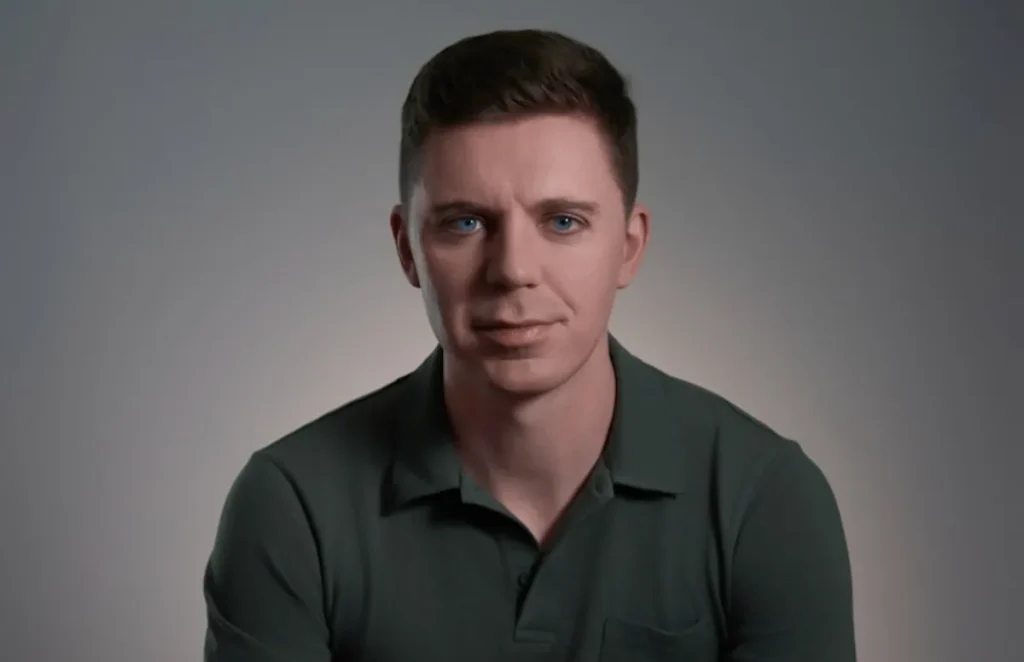

First of all, we spoke to Dave OFlanagan, the CEO and co-founder of Boxever, a cloud-based marketing platform that enables retailers to capture, analyse and act on large volumes of customer data in real-time. He spoke to Real Business about the journey he faced and offered advice to other entrepreneurs who seek to do a similar thing.
What made you decide to start the business
I had a light bulb moment something happened that made me realise I had to take action to make things better.
I was working for a travel tech company at the time, and I was talking with a representative from a major airline who told me how hard it was to know anything about their customers he couldnt even tell if a particular traveller booked tickets with them more than once a year.
Thats when I knew there was an opportunity to address customer intelligence in the travel market, so airlines and other travel providers could better serve travellers.
Our goal has been the same ever since putting customers at the centre of their experience with a brand, by helping companies better understand them, where they come from, how they interact with the brand and what theyre worth.
What difficulties did you face in the first year and how did you overcome them
Our challenges came when we had to start scaling the company to meet the needs of some large international brands. We are headquartered in Dublin, but selling to customers around the world, across the US, Europe and Asia.
With this expansion came new issues like managing an international payroll and navigating various employment laws, even just dealing with people in different time zones took some getting used to. The good news is that the startup ecosystem in Dublin has become formidable and lots of people are bringing passion and knowhow to the community.
The government provides benefits to companies like ours and helps us reach new markets. Having that support was a major factor in helping us overcome those initial challenges. Whats even better is that the startup environment is attractive all sorts of new talent to Dublin, which is helping us build out our global team.
What tips do you have for new startups looking to survive their first year of business
Theres always going to be unanticipated problems that come up in the first year of business. Tapping the local talent pool is one key hiring people who have expertise that your founding team may not have can make all the difference.
Having a presence in areas like Dublin, Boston or Silicon Valley definitely increases your chances of finding talent that can get you through those challenges. Even with an increasingly mobile workforce and all sorts of digital communication methods, location still matters when seeking talent and starting a business.
The first is a crucial time to think about the scalability of the company, and whether the local business environment will allow expansion.
On the next page we hear how one business owner met the task of raising capital with to create a small team and minimum viable product (MVP).
Image: Shutterstock

Next we spoke to the CEO of Goodvidio, Dimitrios Kourtesis. He was driven to set up this business with the desire to help ecommerce sites engage and convert online shoppers with the best product videos curated from social media. An in-depth discussion with him highlighted the steps he took in ensuring business growth.
What made you decide to start the business
We started attending startup meet-ups where up-and-coming entrepreneurs were presenting their ideas and trying to get the community excited for their solutions, and this was truly inspiring. We met people who are not superheroes wearing capes, but flesh-and-blood people building companies that solve very real and tangible problems.
This got us thinking if they can do it, we can do it too. Being around such people was a breath of fresh air. We were bitten by the entrepreneurial bug and got a huge motivation to launch a business of our own. It inspired us to leverage our existing technical knowledge in engineering large scale cloud applications and to apply it to solving a real life industry problem.
This is how Goodvidio was born: driven by the passion for entrepreneurship and a vision of how to make visual commerce attainable for online retail by leveraging the consumer-generated videos from social media like YouTube.
Read more on business survival skills:
- Brits would fail to survive an apocalypse due to lack of STEM skills
- The four best cities in the UK for entrepreneurs looking to run a business
- The business survival instinct: Innovation in times of uncertainty
What difficulties did you face in the first year and how did you overcome them
One of the first challenges we faced at Goodvidio in our early days as a newborn startup was how to secure the funds to form a small team and build a small scale minimum viable product.
We bootstrapped this phase and decided to put some of our own hard-earned money into the business. We truly believed in it and still do, very much so and were prepared for small short-term sacrifices in order to get the wheels moving.
Securing the first round of VC funding came a bit later in the first year. Fundraising is a very demanding exercise, especially for a very early stage company and first-time founders when there is no sales pipeline or monthly revenue coming into the company yet.
We were still in the phase of discovering our early adopters and validating the value of our solution in the market when we started talking to VCs about funding options. It was a tough but eye-opening experience.
We realised that when it comes to early-stage startups, investors are placing high bets on a very strong team that will stick together when things go sideways and be able to prove their business model with a small chunk of funding. So we started by assembling a small but highly efficient team of engineers to build our MVP, looking into our existing connections for people in our network with a drive to pursue innovation and the guts to take this risk with us.
We also worked on talking to potential customers. We understood that we should not pursue a hard sell at first but focus instead on asking for opinions and ideas from the people in the industry. Its surprising how much people are willing to help and open up to early stage startups if you can truly infect them with your passion for the business you’re building.
That being said, attending industry events was really helpful in expanding our network and building opportunities for partnerships and first trials. This was probably what brought us the most traction in the first year of business, and this is what we recommend to all businesses who are just starting to pave their path in the market.
What tips do you have for new startups looking to survive their first year of business
Everyone will tell you what you could and should be doing early on and pretty soon you will get overwhelmed with the abundance of ideas, opportunities and growth hacks you could test.
Focus on whats important. You do not need to perfect your product. Instead, search for validation that your idea is worth pursuing. Its more important to talk to as many potential customers as possible to build a complete product. Speak about the business you’re building and make your aspirations known so that you attract constructive feedback that will set you on the right growth path as early as possible.
Dont get lost with micro-management and doing menial stuff like bookkeeping. You can always outsource this to the people with the right set of skills and experience. In your first year put all your talent and effort on customer discovery and on building the foundation for future relationships.
To put it bluntly, dont start spending too much money on development before you get some proof that what you’re building makes sense and is actually wanted. Being customer-centric starting from the very early days will pay in the long run tenfold, so learn to listen and adapt.
On the final page we hear from a sharing economy venture that uses internal disruption as a method of survival.

Finally, we spoke to Ali Clabburn, the founder and MD of sharing economy venture Liftshare. The site enables people to find drivers or passengers to share or seek a lift with for their journey.
With a desire to help communities travel more sustainably, Clabburn set up his business and saw success in a very short time. Now he discusses his experiences in the entrepreneurial world and how he made it to where he is today, having started the business at university.
What made you decide to start the business
Ive always been a keen traveller, and have often found myself experiencing the generosity of strangers in foreign countries, who gladly share the little they have. It was very different from the counter-intuitive focus on ownership I knew back home.
In particular, I was struck by the common sense of sharing transport and the illogical approach to travel in the UK, with the single-occupancy car still being king. I was impressed by the popular tuk-tuks in Thailand, the taxi-sharing I witnessed in Africa and South America, the social norm of hitch-hiking in New Zealand, and I realised that things needed to change in the UK.
Determined to start a transport revolution in the UK, and help people overcome the increasingly prohibitive cost of travel, 23-year-old me founded Liftshare in my final year at university.
In the early days, I also did a spell of early morning shifts in the Virgin Money post room, to cover basic costs and learn how Richard Branson keeps his team smiling. My sister had left home, so I squeezed into her old bedroom to set up this first office where with the support of a handful of unpaid friends Liftshare was created.
What difficulties did you face in the first year and how did you overcome them
An IT-savvy friend set up the very first version liftshare.com website, aimed at matching people making journeys with others wanting to go the same way. It was way ahead of its time: launched before Google or Facebook, Liftshare was one of the worlds first social networks. But the early days are often challenging and daunting for pioneers.
Car-sharing seemed so obvious that many people disregarded it. Money was tight, to say the least. I had scant idea of how to use a computer and no idea of how to run a business. Few people were yet familiar or comfortable with the internet, and creating critical mass proved less straightforward than I had anticipated. Funding my efforts to change the way we travel in the UK proved an almost insurmountable obstacle at first.
Today Liftshare has a critical mass which cannot be found anywhere else, but the way to achieve this was not apparent in those early days. With a beginners enthusiasm, I planned to build membership through liftshare.com first audience: students and festival-goers. I imagined 10,000 of them joining in year one, each paying 10 to make the website sustainable.
On day one, I made just 40 not even enough to cover travel costs. On day two, it became free, many more people joined and it has been free for individuals ever since.
We rapidly reworked the business model, so that Liftshare is now funded by businesses, communities, hospitals and universities. They pay to have their own bespoke branded lift-sharing schemes, with the option to access the huge public network of Liftshare members, giving users the best chance of finding others going their way.
What tips do you have for new startups looking to survive their first year of business
As soon as you stop learning you need to change something. If you are not enjoying it then sleep on it. If you’re not learning or enjoying it then find something else to do. Dont be afraid to pivot if the direction you’re taking doesnt work, and make sure you sense-check regularly for whether or not something needs to change.
And finally, disrupt yourself before a competitor does it for you. Weve used internal disruption to launch new products and new teams; making sure were at the forefront of product development before another company beats us to it.
In February, we spoke with UK retail startups and discovered the challenges of entering an age-old industry with a new proposition.
The journey from a small business to a real business is a challenge for all. The direction that you take will decipher the success of your business, thus it is key to do all the right things. If something doesnt work, change the methods you implement. In the initial stages of your business, try and test the waters with what is right.
You dont want to invest all your time into one thing that could be wrong and you certainly dont want to invest huge amounts of money into something that might not do honours for your business. Most importantly, learn from mistakes. Its crucial to overcome unanticipated issues within a company and it’s fair to say they can either make or break your business.
To view them as a mere obstacle will benefit you and your business greatly, because indeed, mistakes are lessons after all. However, if you wish to view them as negative situations and struggle to tackle them, your business will bare the consequences.
Stephen Verber specialises in corporate finance and heads up the forensic accounting department at Alexander & Co. Verber is also a member of The Academy of Experts.