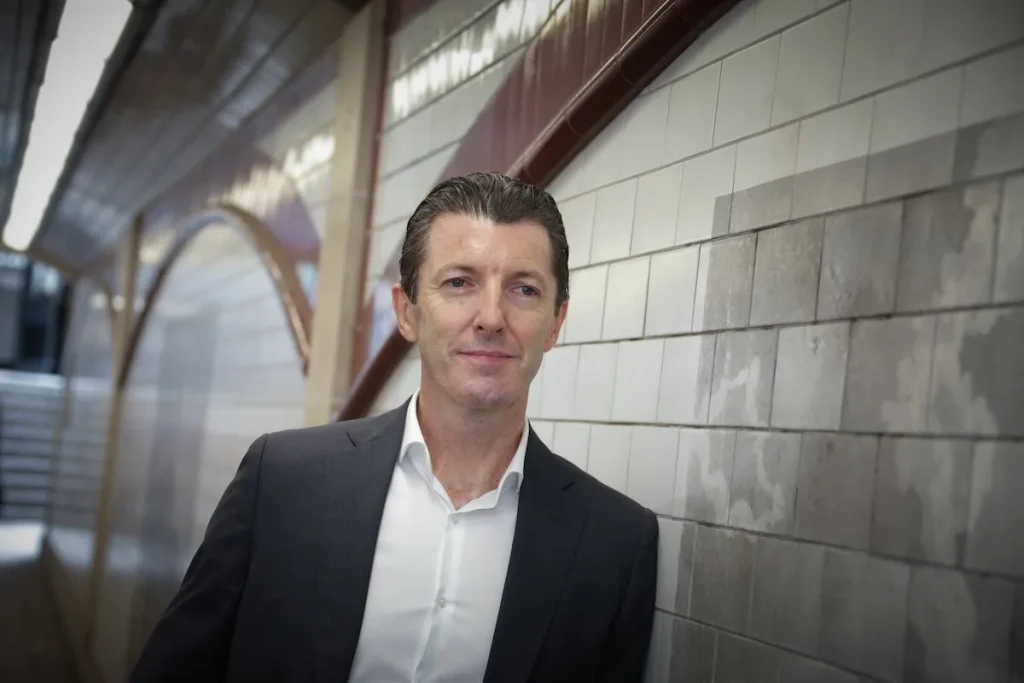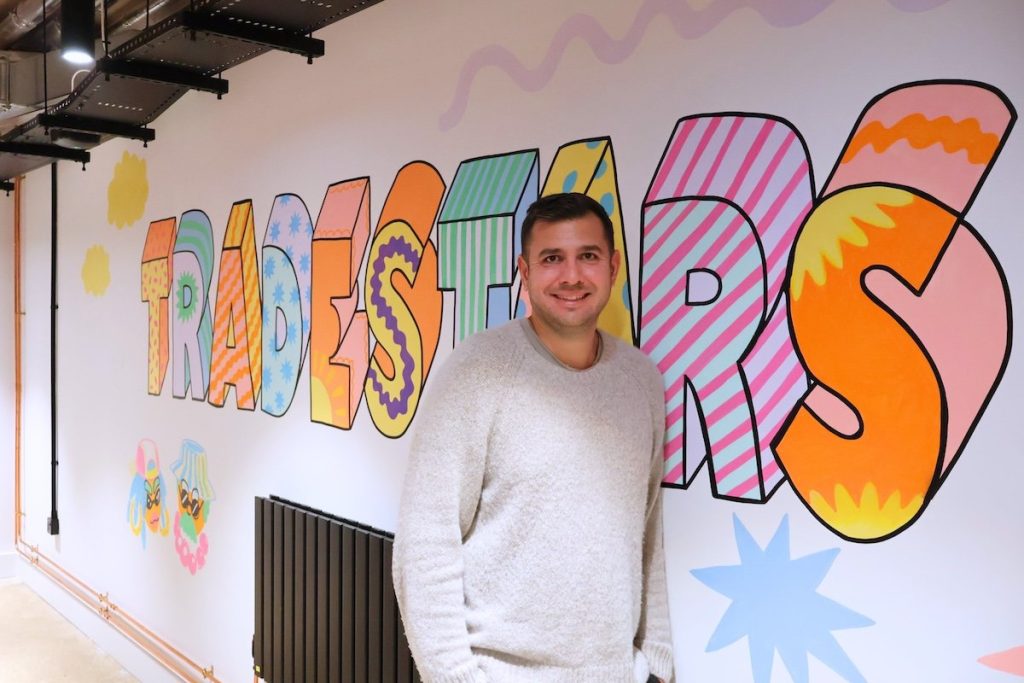

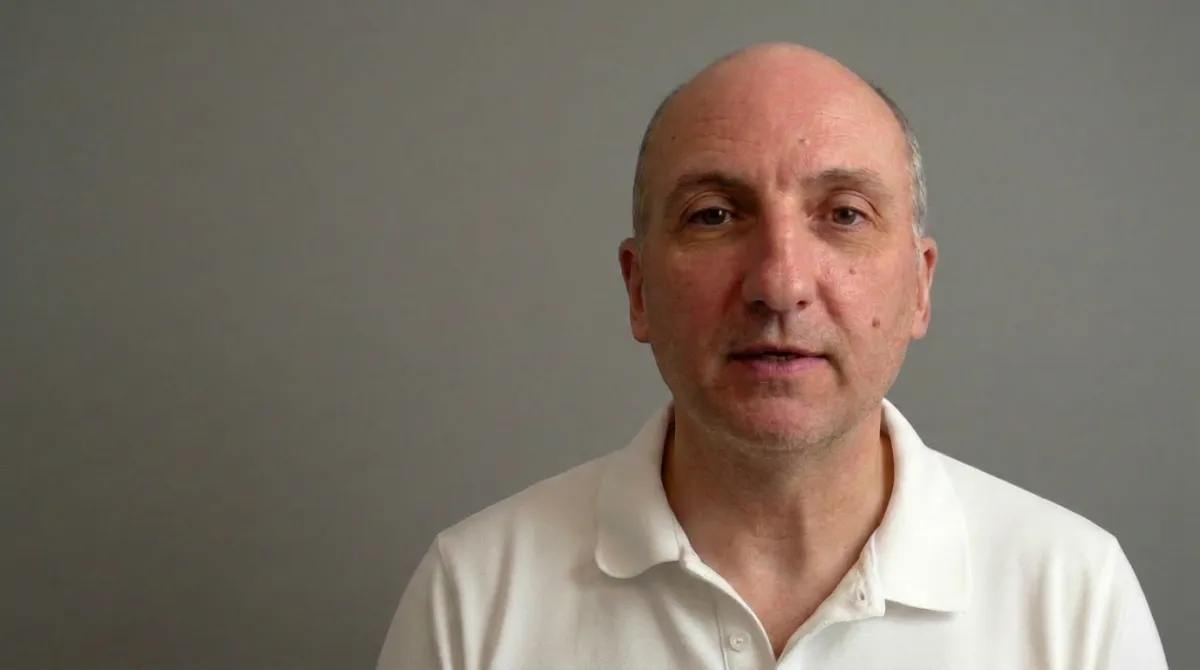
When Simon Brookes secured his first job out of school as a sales representative selling plant hire equipment for a construction company, little did he know that he’d one day face the drama of an injunction claim in a high court, pivot into the payroll space and launch two construction-sector payroll firms with a silent partner.
His current venture, Derby-based Mineral Payroll, in which Brookes holds a managing director role (a first for him, he tells me), and a founder one, pays the salaries of between 800-900 operatives and is projected to hit £30m in revenue this year, not bad for a business founded under two years ago with a team of four.
What his story tells us is that great business lessons can be found in the most surprising arenas, including, as it turns out, in construction payroll. For starters, the name, Mineral Payroll, Brookes explains, is entirely his creation. “It was a funny discussion I had with friends and family,” he reveals. “I wanted something earthy and related to construction in some loose way, you know, like terra firma, earth, ground. Because a lot of where it starts in construction starts in the ground.”
For entrepreneurs in the brainstorming process of finding a business name, Brookes has the following advice: “Utilise a name that has some loose meaning to you or to the sector you operate in, and once you have something along those lines, you can put it out to friends and family and give them the criteria you’re looking for.”
These demarcations, he adds, can help keep the focus. “This means you don’t get weird stuff coming in, and at least it’s all relevant to the premise of what you want the company name to look like.”
Entrepreneurial folks come to their lightbulb moment at different times in their career journey. Some realise it before they’ve had their first-ever job, others right in the middle of their careers.
For Brookes, it came twenty-five years down the line working for a large construction payroll firm. When interviewing for a role at another company, Brookes found himself in a legal battle with his then employer which resulted in a High Court case where the employer successfully obtained an injunction enforcing contractual restrictions. “It was probably the most stressful time of my business and personal life,” he admits.
There came a knock on the door from a company representative who notified Brookes of his suspension and an impending investigation: “He drove away with the company car.”
From an injunction to entrepreneurship
Brookes attended the company’s offices, where he says he was asked to sign a document to prevent him from working for a competitor for around 12 months. “Effectively, I’d be out of work unless I found another job in another sector for those 12 months. I was between the devil and the deep blue sea.”
Brookes didn’t sign, and the case went to the High Court, with the company seeking an injunction against Brookes, who claims he was willing to sign a contract to prove he wouldn’t touch any of their clients if he left to join the competitor firm.
The case was solved in one day and the injunction was put in place. “My knees were knocking in the actual hearing,” he reveals. Reflecting on the situation, he says he believes it could have been handled differently, but that it did influence his approach to handling people further down the line. “You need boundaries and rules which are important in society and business,” he admits. “But I certainly wouldn’t deal with people in the manner that I’ve been dealt with.”
A 10-year journey to leadership
The entrepreneurial spark was there after the challenges of the court case, but it would take Brookes a decade to achieve it. “I had to get out of the game,” says Brookes of his life post-injunction. There followed a spell in the energy sector, a role offered to him by a friend to tide him over. Thereafter, he was approached by a firm in the construction payroll side of business.
By 2020, Brookes was approached again, but this time by a majority shareholder of another payroll firm. Five years later, the time finally came for Brookes to engage with his own entrepreneurial endeavour, a founder and managing director role at Mineral Payroll, which came to life in 2024.
Brookes is clear about his leadership style. “My instinct is to put an arm around someone,” he shares. “Using the carrot and stick analogy, I’ll do the carrot rather than the stick. I always start with that. I’m a bit more warm and fluffy rather than binary.”
While he admits there are some situations where the carrot approach doesn’t always work, he’s not had to use it yet. “I’m glad to say I’ve never, in the short time that I’ve been managing director, had to use a stick. I’ve got great staff, and we work very much as a team.”
Although Brookes is prepared to “be a bit more frank and blunt” when needed. “I might have to take some advice if and when they ever arise, but my starting point is always to have a conversation and do it with a smile on my face and with a few please and thank yous.”
He confesses that he is still feeling out his managing director role. In the past, and like many others, he kept his stresses and anxieties to himself. “Historically, I’ve very much kept it internal and just ploughed through, the stiff upper lip, you can do it type thing.”
These days, with Mineral Payroll and in a new leadership position where he takes a bird’s eye view of the business, Brookes has become more open to asking for help. “You know the old cliche that a problem shared is a problem halved? It’s true in a lot of cases.”
Mineral Payroll, he says, is trying to do more than simply pay client operatives; it’s actually trying to help clients run their own businesses better. Via their newsletter and socials, they keep clients up to date with industry news and legislation changes. One example at the moment, he tells me, is due diligence. “If they’re not happy that their supply chain is compliant when they do that due diligence, they can look at other companies and solutions out there, like ourselves, who do it compliantly. I think it’s good to give clients all the information. Then they can make an informed decision on what they want to do.”
Well, they say opportunities can arise from adversity, and in Brookes’ case, the path to entrepreneurship was long and winding, but it got him there in the end.