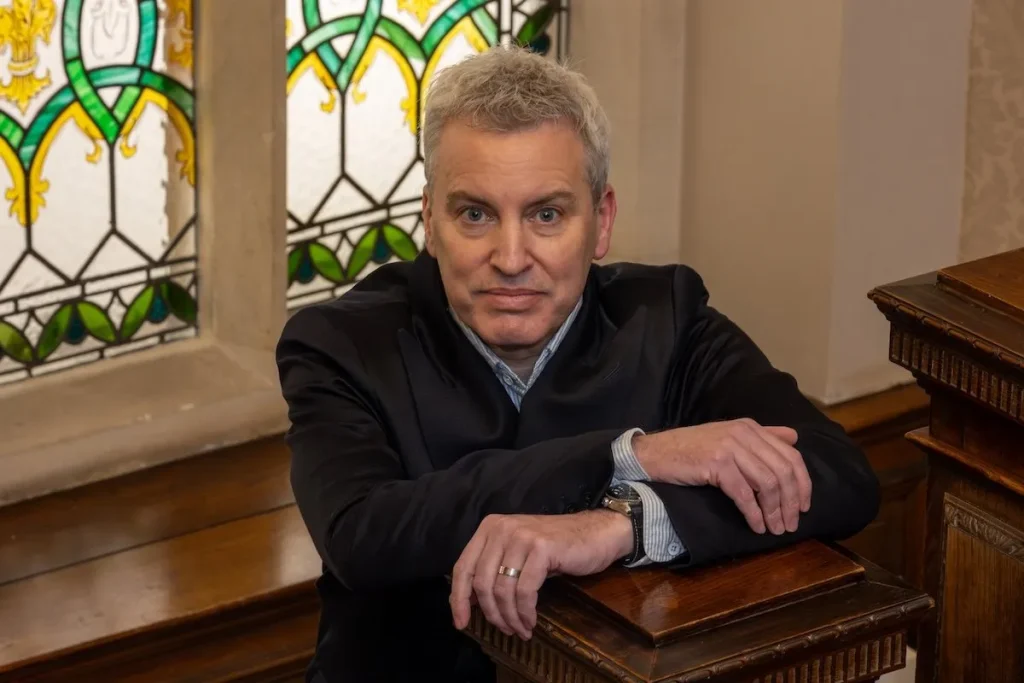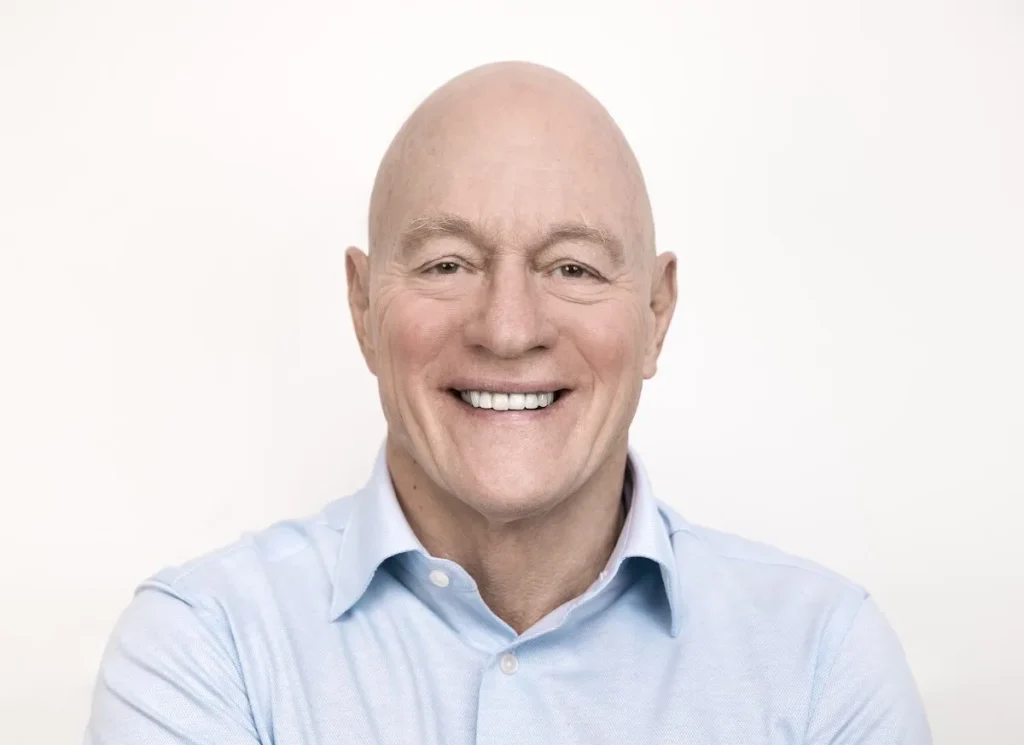

Real Business spoke with Simon Bones, founder and CEO of premium home retrofit company Genous, to gain some insight into his motivation, challenges and more.
What is the most rewarding and the most challenging aspect of running a startup?
The most rewarding aspect is being able to do what you want without fear; there are no constraining corporate factors, no requirement to toe the line and a positive disincentive to do the same thing as everyone else. The most challenging aspect is that you don’t have the number of people, cash in the bank, brand strength, and ability to get in the room with the people you want, so it can often feel like you’re fighting your way in as an outsider and there’s a risk of going under that is always present.
Many entrepreneurs start with a problem they want to solve. What was the exact “lightbulb moment” when you realised there was a gap in the home retrofit market?
Finding the gap was actually super-easy: retrofit in the UK simply doesn’t work, and everyone knows that. The difficult bit was establishing how to fix it, and there was no specific light-bulb moment here: I knew that if I approached it methodically, working out what needed fixing, and what needed to be done really well to solve the problem, then it would come, and of course it did. If there was a lightbulb moment, it was realising, once we’d done all the maths and the analysis, how financially and environmentally compelling a good home retrofit normally is, which is hard to believe when you think that almost no one does it.
Retrofitting can sound complicated and daunting. What’s your strategy for making the process more approachable and attractive for customers?
It is inherently intellectually complicated if you’re doing more than a basic ‘bang in some insulation’ or ‘stick some solar panels up’ approach – there’s no way around that. However, our quantitative approach, smart algorithms and insistence on only installing the best equipment means that the decisions for a customer become ‘what do I want’ and ‘how much do I want to spend’ and ‘what are my objectives’ not ‘which combinations work best’ or ‘how do I use all the various technologies to achieve those objectives’.
As to attractiveness, with very few exceptions, it comes down to whether you have the funds and type of property to do it properly: if you do, there is pretty much nothing you can invest in that generates the same risk-adjusted returns or reduces your footprint without significantly changing your lifestyle. We often joke that if you can afford and are practically able to retrofit, the only reason not to is if you hate the planet more than you like making money – and the more you think about it, the more you realise how few people there really are in that particular bucket!
What prompted you to start a company in the retrofit sector?
I’d co-founded, grown, run and successfully sold an international management consulting company, so I didn’t feel the need to do something like that again. And my climate change interests (I’m also a published academic in climate change science) meant I was always going to go into something decarbonisation-related. Having retrofitted three properties personally, I knew how badly the sector operates, and the various success factors here were things I either thought I had already or wanted to learn.
What can company leaders/CEOs do better to promote climate initiatives in their sector?
It’s hard for businesses that aren’t in the sector because the economically most advantageous approach is generally to ignore this stuff completely. I hate to say it, but it’s true, and one of the reasons I had no interest in going into B2B decarbonisation, that so much is so often stacked against taking the right decisions.
All I’d say is, do the right thing anyway. Someone else may make more money not doing it, but you’re going to die anyway, and if you are in that role, you likely have enough money anyway, so try to do something you’d be proud of rather than selling your soul for a bigger bonus.
Having co-founded and sold a successful consultancy before, what lessons in leadership and scaling are you applying to Genous?
Our consulting business was focused on doing the best job for clients first and making money second. The trick here, as long as you’re working in a market that is not all about price (and Genous will never work in those markets unless we have an unassailable cost advantage), is that if you do the first and are operationally and financially competent, then the second follows. There are too many people in this sector trying to do what they think they can make money out of, rather than actually giving customers what they want to buy.
Genous is positioned as the UK’s premium home retrofit company. What does “premium” mean in this context, and how does it set you apart from other providers?
We normally say we’re about ‘intelligent retrofit’ rather than ‘premium’, but I don’t have a problem with that positioning. What it means is that we’re about designing the right solution with cost in mind rather than designing the most cost-effective solution with (maybe) quality in mind, which is what this industry does.
High-end customers expect high service and simply won’t tolerate anything else, but in any case, we’d argue this is what all customers should get, not just the multi-millionaires. So we try to focus on service and not just the best technical advice and solution
What advice would you give to homeowners who want to start their retrofit journey but don’t know where to begin?
Apart from filling in Genous’s free online Home Check and contacting us for a survey (!), the main advice is to say it’s not that difficult if you have a good guide and can afford it. The main challenge we find is for people who need funding for work because they don’t have a budget, or to borrow to do their retrofits, because this side of the market is much harder to get good outcomes on.
Those people who have the funds and just want to know that what they’re doing will give them an optimised good financial and environmental return on their investment and not risk their homes, their comfort or their sanity, tend to pick Genous.
About Simon Bones
Simon Bones is the founder and CEO of Genous, the UK’s premium home retrofit company. Focused on professionalism and personalised service, Simon has combined his expertise in climate change science and energy and infrastructure services with his personal experience of delivering multiple home retrofits to help shift the public’s mindset and bring us closer to a more energy efficient and greener future.
His philosophy centres around empowering people to improve their properties and embrace environmentally and wallet friendly solutions. Identifying a knowledge gap among almost all consumers when it comes to renewable solutions and with no company able to provide high service solutions across multiple categories of home energy savings, Genous was born, with a commitment to simplifying the process and educating customers at the same time.
Prior to Genous, Simon was co-founder and managing partner of international strategy consultancy Credo, which he successfully sold to CVC Capital-backed Teneo and where he focused on construction/property, infrastructure and energy services. He has personally also retrofitted multiple properties, installing insulation, performance glazing, smart controls, solar panels, heat pumps and biomass heating systems along with EV charging upgrades.
A published academic, Simon is a Visiting Research Fellow in climate change science at the University of Bristol and has Masters’ degrees from Oxford University and Bristol in Physics & Philosophy and Climate Change Science & Policy respectively. Simon is based in Wiltshire where he lives with his family.