
Mental health is defined by the World Health Organisation as “a state of wellbeing in which every individual realises his or her own potential, can counter’stress in normal life situations, can work productively and fruitfully, and is able to make a contribution to the community.”
When worded this way, who can deny its importance A lot of companies, it seems, given how we’still find the UK’s response to tackling mental health issues lacking. But with our world increasingly moving towards a 24/7 culture, leaderscan ill-afford to take their time crafting strategies that will counter stress.
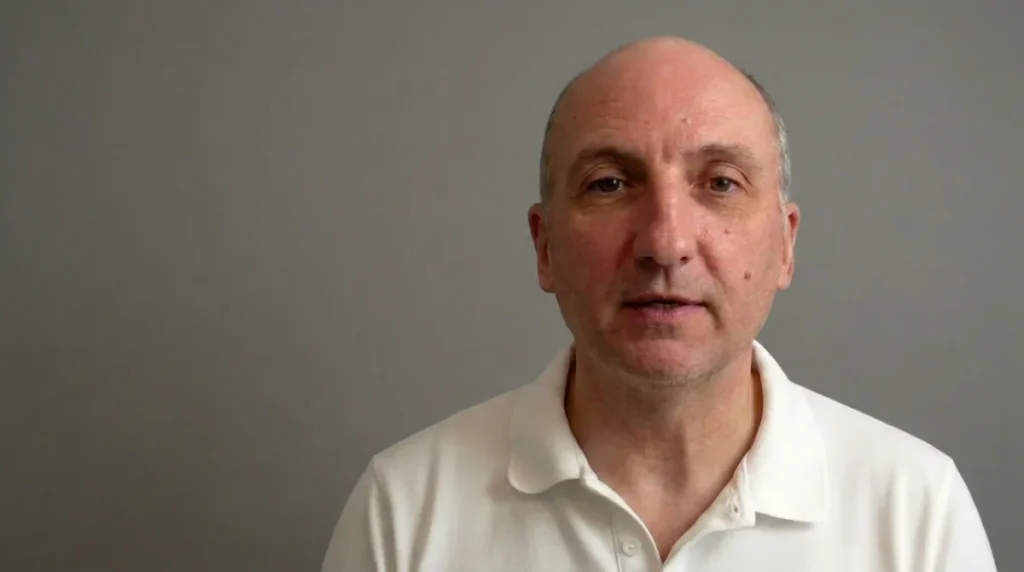
Hoping to emphasise the need for more support among the SME community,?Real Business spoke to?Gedanken managing director David Cliff, who?spent a portion of hiscareer as a psychiatric social worker dealing with the challenges of mental health.
The good news is, according to?Cliff, that a conversation, some appreciation and a caf latte among other factors?” can prove efficient ways to boost someone’s mood.
What is your opinion on the overall UK working environment and its impact on mental health?
An Institute of Directors survey suggested only 14?per cent of its member organisations had a coherent mental health policy. When applied to the country as a whole, there is a huge distance to travel in terms of promoting mental health and wellbeing within the workplace.
The last 20 years or so have seen the importation of American management techniques which, when suffused with the impact of globalisation and cheaper labour overseas, along with domestic economic and austerity measures, have resulted in increasing drive for performance. It has also generated a long hours culture, an impetus on flexible working and the constant need to foster productivity.
The attendant stresses of these processes, combined with individuals working in a technologically advanced world, makes it is easy for people’s mental health needs to fall from the agenda. All too often, I see boards not quite knowing what to do with the grim news that “morale is low”. It is often something that is acknowledged without necessarily anyone having the cognisance as to what to do with that finding.
What do you believe are the benefits of investing in employees” health and wellbeing?
It is important to invest in employees” health and wellbeing and help. That often starts with simply being a good employer. Decent wages, a nice environment, a fair system of progression and reward and the avoidance of favouritism or a covert meritocracy can make staff feel they”have a sense of purpose and meaning in their lives. This should be in place long before a coherent employee engagement policy.
Indeed, many policies have been brought in to substitute for what is effectively poor management and leadership, poor personnel practices and a general neglect of staff as a valued resource who are truly individual. Oppressive practices that are designed to drive down sickness whilst bringing in fairness will never substitute for areas of enlightened discretion, no matter how?many risks that might bring in terms of potential manipulation by some.
Most staff are honest, hard-working and committed. Rather than dealing with the complexity of that, firms adopt a global X?Y perspective of managing staff using policies of sameness rather than uniquely case working each situation. We have to be careful not to consign good staff care to arcane policy documentation and ritualistic procedures.
In what ways do you boostemployees” wellbeing?
I would suggest some basic workplace practices, such as the ones discussed above. Give employees a contract on time that’s fair, value their inputAnd encourage participation. Understand the problems of the double day for people with children or dependents and where possible, help counter stress. Offer behavioural flexibility ensuring that, as long as the job is done to a decent quality and with an eye to customers, there can be multiple ways to get there.
Most of all, a respect on the values of individuality. Our mental wellbeing is brought more under pressure by a sense of lost identity than the rigours of the job itself. We need all of these basics before we consider appraisal systems, effective trainingAnd involvement in meeting processes.
How would supporting staff mental health help business in the long-run?
If you break your leg, you can still sit at a desk and work productively?” that is, if you are doing office work. But if you’re depressed or anxious, your productivity goes down. This simple difference is not appreciated by many managers.
But then I work with so many managers who have underlying mental health problems themselves. They are depressed, anxious or perhaps have some obsessive-compulsive traits, but are functional nonetheless and continue to tough it out rather than seeking the help they need. Such personal denial offers little hope for a leader seeking to provide a truly flexible service for their staff.
How would you advise SME bosses address staff mental health?
Firstly, let’s abandon the old notions of mental health being some form of moral defect. One in four people are affected by depression and at any point in time one in ten?people will have a compulsory admission to psychiatric hospital. Some three per cent?of the workforce have psychopathic disorder, while one per cent will be suffering from schizophrenia. Between ten per centAnd 25?per cent will be suffering from anxiety and depression.
So the first position for any employer is to recognise that this is real, it’s happening in your firm, it needs a sensible approach and you do indeed need to help counter stress. HR staff trained and orientated in working with mental health is important. Some staff have mental health first aid schemes which can be useful, but these can place pressures on other staff.
The key is to develop arrangements whereby the company can develop the necessary awareness to support mental health difficulties whilst maintaining productive function and outsourcing to requisite expertise where necessary. This ensures people are appropriately supported.
A big old chestnut for me is the weekly call by some companies to a member of staff on the sick with a mental health problem. It is intended to be well-meaning, but ultimately asks the person when they are coming back far earlier than their condition will lend itself to. Such a practice is unproductive.
Read on for Cliff’s thoughts on the most common misconceptions and the wonders of the caf latte
Is it often the case that people don’t realise what their own mental health situation is?
No-one likes to admit to being below par, let alone feeling they are “losing it” in some way. There’s a social stigma attached to needing help to counter stress. In the business community, I have seen depressed business leaders or those whose businesses were about to go under, practice the level of denial that was close to complete fabrication.
I need to demonstrate constantly the “onwards and upwards” mindset that many believe maintains business confidence. It’s baloney, but it happens. Then of course there are the symptomatic sequelae of the mental disorder themselves. Frequently these are associated with lack of insight and denial. We also have a problem of popular public awareness of mental health disorders.
People colloquially describe themselves as “OCD”, “manic”, and a whole range of other references that are associated often with minor symptomology when in fact the conditions described, if truly visited upon them, would be serious mental challenges. This makes it hard for people to have sensible conversations when they’re in difficulty and equally very hard for somebody suffering in isolation to calibrate their experiences alongside the conversational predicates their peers use.
What do you think can be done to improve understanding of mental health illnesses?
Whilst training the workforce through the likes of mental health first aid may assist, access to good support and consultancy, particularly by HR staff is critical. Beyond this, my vision of mental health awareness is one where there is a tacit acceptance that at some point in people’s lives they will experience challenges that they lack the resources to address without help.
At this point, it’s critical for the employer, along with community and other services, to work together to contribute to the high support a person needs at that time to counter stress. Such a perspective is commensurate with what I see as good corporate and social responsibility, but it’s also beyond that. It’s part of companies being part of the community and sharing in the common humanity we all experience.
What is the most common misconception around mental health?
The most common misconception is missed the maintenance of mental health is a lifelong condition. Actually, the majority of people get well again and there need never be a recurrence. That said some people have enduring problems that need additional thought and care.
Another misconception is the fact that somehow this is something to do purely with the person’s personal life. Very often poor management leadership, poor change management, demeaning, intimidating, exhaustive or repetitive practices can all impact on a person’s mental health. So much can be done to make a difference when it comes to helpingcounter stress.
How do you unwind after a tough week?
I tend not to get wound up in the first place, however tough the week is. Maintaining personal awareness, talking about my dilemmas, being open with my feelings and not having to put on a “front” to impress takes a load of stress off my back before I start to work.
I keep my eloquence available for being effective at what I do, rather than the rubbish I need to generate to deceive others. MeditationAnd music in the company of a very small black cat also makes a huge difference. Animals are therapeutic and they innately ground one to the world and create experiences other than that of the corporate cut and thrust.
Do you have any rituals to improve your own mental health?
I must admit I thought of a whimsical response to this, such as slaughtering a few chickens in the moonlight and giving thanks to the God of Wagga-Wagga! My sense of humour is how Icounter stress. I look at the funny side of things because, let’s face it, whatever troubles us now is not going to matter a hill of beans in 100?years. So let’s not get too stressed by our perceived importance.
More seriously, the ceremonial stopping for a caf latte can produce much relief in the here and now. For most people rituals create a sense of safety. When shared they provide a social structure that often gives the perception of stability and continuity, wherein reality things?might be changing radically.
This is why people go to church at times of crises and communities come together. Gallons of tea are made when villages flood, and boxes of clothing far in excess of what people need are provided, because it helps people counter stress and do something rather than nothing. We are creatures of ritual that gives meaning to our world.
Equally, however, rituals can be unhelpful in workplaces. Employeescringe about meetings, and managers need to understand why. Also, an over focus on belonging to a team, rather than respecting the individual, can lead to almost punishment-centered invitations to social events.