
It doesnt matter where you are in the world. Emotion sells brands. Replace it with logic and youll fall at the first hurdle.
Emotion got me hooked on Molton Brown, when logic would have seen me running away. In 1989 I was shopping with my fianc Veronica (who later became my wife) in South Molton Street. We went into Molton Brown to buy lipstick and I fell in love with the environment the smells, textures, colours and, most of all, the products.
I got chatting to the lady behind the counter who told me the shop had been trading for 17 years, initially as a hair salon. People flew from all over the world to buy its signature curlers or nettle and chamomile lotions.
Intrigued, I asked her boss, Harvey Collis, why it wasnt better known. Havent I got enough problems was his laconic reply.
I said I thought I could help. So in the middle of a recession, I quit my City job and started at Molton Brown.
My timing couldnt have been worse. Within six months, Harvey and his wife Caroline had separated and their business had gone into receivership. Harvey bought out the hair salon, while businessman Michael Warshaw helped Caroline fund the cosmetics side.
When Michael asked if I wanted to stay involved, I said absolutely but only for a stake in the business. Do you truly believe in my ability to help you I asked. Yes,” he said. Well, would you mind lending me the money to buy my shares At that point I was penniless.
Michael agreed and became my mentor. Molton Brown was my university as a vertically integrated company it gave me the foundations of everything I know about business.
We inherited a brand with a mountain of stock, a factory in Bishop Stortford and a couple of luxury hotel accounts providing miniature hand wash bottles for guest bathrooms. We were losing 30p on every bottle.
Initially, Michael wanted to close the factory and get out of the hotels. But when we examined the costings, we saw we could manufacture more efficiently and start making a margin. In later years, having our own factory gave us a competitive advantage as we could provide unrivalled levels of service.
For the first few years my task was to expand the hotels business internationally. At that stage, we were the only premium brand in the market. When general managers asked why theyd never heard of us we said we were highly exclusive . We were at least three times the price of the products they were buying.
As our visibility increased, we evolved the message to market leader , maintaining our elite status by offering fragrance exclusivity instead. Our hand wash went from being a novelty to a lifestyle statement, eventually stocked in more than 700 hotels and restaurants.
Some markets were harder to crack than others. In Japan we needed a partner to penetrate a tight network, while in the Middle East we had to deal with the negative association of placing your brand in a washroom environment. America was difficult with its large chains, low priced amenity culture we had to educate people on the value of buying higher quality branded products.
The tipping point came when we won the contract to supply British Airways travel kits. From then on growth accelerated and we shifted our profit profile from hotels to retail, still reinforcing our message as a luxury lifestyle brand.
Any new ranges were designed to create a halo effect to support the premium positioning. Customers bought our hand wash to demonstrate their level of sophistication. It was associated with the finest restaurants and hospitality brands and considered special enough to stimulate a strong emotional connection and thereby justify its price.
Our own emotions ran high, giving us added impetus. As a small, independent British brand taking on the world, we wouldnt let a single account go. In the department stores we adopted the same siege mentality from these mini fortresses we fought tooth and nail for every sale.
We cultivated a complete, single-minded belief that we were the best and assured people that if they felt our product was not what it should be, wed change it again and again until it met their expectations.
For beneath our bravado, Michael had instilled in us the notion that you can never quite be good enough. It kept us on our toes.
People used to say that if you pricked me Id bleed Naran Ji liquid handwash. You can’t get more emotional about your brand than that.
Extracted from ‘Going Global: 30 Years 30 Insights’ by Piper, the leading specialist investor in consumer brands.
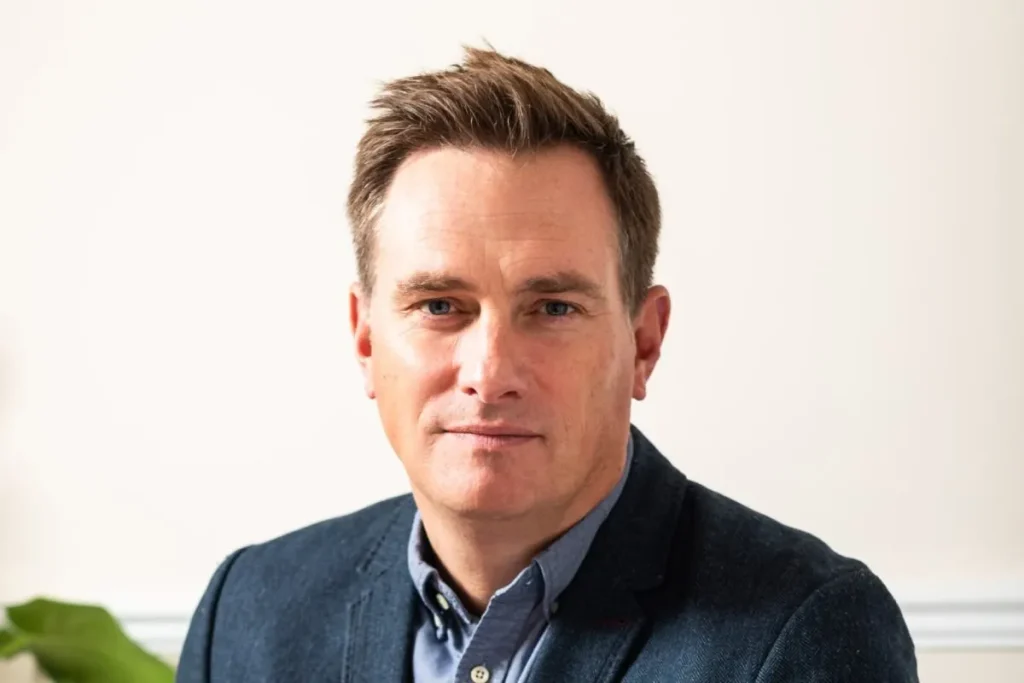
Having begun his career in the City, Charles Denton joined Molton Brown in 1989 and later became chief executive until its sale to Japans Kao Corporation in 2005. He left to work for various charitable organisations, notably Great Ormond Street Hospital Childrens Charity as executive director from 2006-2009 and chairman of fundraising until 2012. In 2011, Denton acquired New York-based luxury skincare brand Erno Laszlo and is currently executive chairman. He is also non-executive director at Untap.it, a social enterprise championed by Sir Richard Branson to support young people around the world.