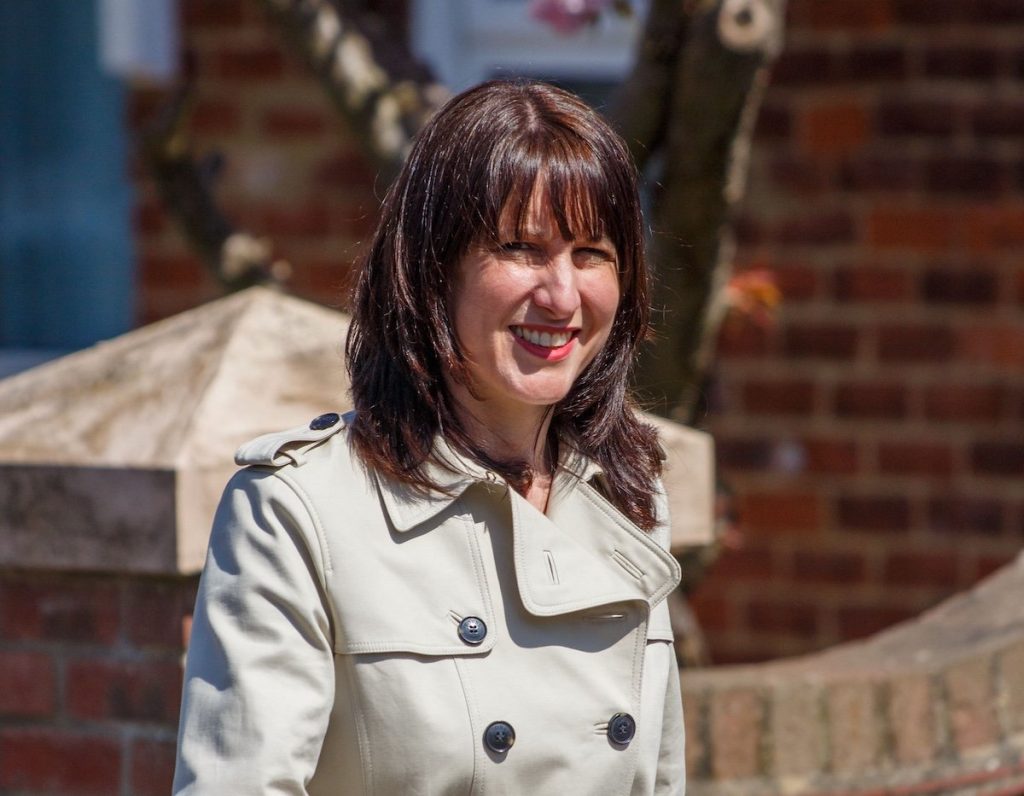

“We’re expecting money to be hitting companies’ accounts by the end of this month,” says Minister for Small Business, Paul Scully MP regarding the various schemes in place for businesses during the COVID-19 outbreak.
Businesses across the UK have been forced to take measures to shut down everyday activity in order to protect public health and the NHS, but the immediate financial impact on people’s jobs and livelihoods has put an increased strain on the Government to provide relief and answers.
When will the lockdown be lifted
Small Business Minister Paul Scully MP believes that people staying at home and avoiding non-essential travel is starting to work on flattening the curve, but?we should aim to get back to work as quickly as possible once safe to do so. “We’ve been really clear about businesses that should remain closed, where people tend to congregate like pubs and restaurants. (This shouldn’t affect) businesses where you can’t work from home but can socially distance,” he said.
“You know your customers and employees best, and can work to put the right things in place to keep them and their family safe. I can’t give you a time (regarding coming out of lockdown), but can give you the reassurance that we’ll be ready for it and will bounce back as best we can.”
What are options for newly self-employed individuals?
One of the groups most affected by the lockdown and social distancing are the UK’s self-employed workforce. Comprising just over five million people, some 15% of the working population, this group contributes a combined £305bn to the UK economy.
According to one estimate from the Resolution Foundation, even before taking account of a wider economic slowdown, there are 1.7 million self-employed workers ?who are likely to face major income losses because they work in the sectors most affected by the current lockdown, or are [self-employed] parents affected by school closures?.
Scully agrees. “People falling through the cracks are those that are self-employed. One of the ways the Chancellor has looked into this is to make sure to give as much support as we can, reverse engineering government systems en masse for millions of people to give them access to grants and various schemes.”
The coronavirus?Self-employment Income Support Scheme is available to those who have made a tax return for 2018/19. This scheme will allow you to claim a taxable grant worth 80% of your trading profits up to a maximum of £2,500 a month. It will be available for 3 months, but may be extended.
“You still have time if you missed the January deadline,” Scully said. “However, newly self-employed people won’t be able to access this scheme, but we’ve made Universal Credit and Statutory Sick Pay easier to claim in the meantime.”
CBILS: When will small businesses actually receive this funding?
“We’ve got a call with the British Business Bank later on today, and it’s something we’re monitoring day-to-day,” Scully said. “We’re looking at this from the perspective of a one-man business, dedicated to running their business day-to-day, suddenly thrust into these emergency measures…how do they access this funding?”
“We’re trying to widen (CBILS) to alternative lenders and P2P lenders so that will open up the market to different type of businesses.”
Scully explained that ultimately, CBILS is a bank loan and needs to be applied for in the same way as a commercial loan; through local banks. “We’ve made changes to get rid of all the hoops involved in getting a loan, such as personal guarantees. If you went to your bank a couple of weeks and got put off by it, go back and have another go. A lot of the process is automated, and does away with credit history and personal guarantees. And there is no need to go through commercial schemes before accessing the government scheme”
“If you bank with one of the banks not approved yet, then you’ll need to shop around to find a lender. We’re accrediting more banks and lenders, so if it’s not there right now, it may be in the days to come.”
Business rate relief: What can tenants do?
According to Scully, business incubators and shared work spaces that may have an all-inclusive rent, where rates are included, the landlords may be getting some rate relief and could spread that benefit to the businesses on their premises.
“Rate relief should come in within days but different local authorities work at different speeds, which we’re checking on a day-to-day basis.”
“We can come up with all these schemes but if businesses aren’t getting the money, we need to find out what the blockages are,” he added. “We’re expecting money to be hitting companies accounts by the end of this month, that is, within next two weeks. I know it’s a stretch for some companies, but we’re doing what we can. The chancellor said we’ll do whatever it takes. We’ll do whatever we can do to make sure the economy recovers in the best way possible.”
What about SMEs paying themselves in dividends?
Small businesses paying themselves in dividends currently cannot access some of the coronavirus support schemes. Universal Credit and Statutory Sick Pay are the only options available to this category of SME employees at present. “It’sclearly not as generous or open as other schemes, bur it’s a solution for now.”
“It’s so frustrating. I’ve done it myself 8 years ago. I ran a small company and it was just two of us working at a kitchen table. We didn’t want to set up a payroll system as it seemed cumbersome for just the two of us. I totally understand the frustration. We need a relatively easy to understand, streamlined scheme. I’m really aware of the problem,” Scully said.
“What I need is to work on a solution that identify whether those directors are getting their dividends solely from the company as part of their pay. Right now the tax scheme doesn’t differentiate dividends part of pay or dividends as investment.”
Biggest lessons for the Government
“This has been a major reinforcement of the importance of small businesses. In terms of lessons, we’ve learned how we need to make sure banks can keep liquidity and keep lending and the importance of’simpler, more streamlined and quality business support throughout the country,” Scully said.
“We have a lot of business advice, and I want to make sure it’s consistent across the country. Whether it’s an emergency situation or just a normal situation, businesses should know exactly where to go.”
“When it comes to deferring payment, we’ll see what exactly happens with the lockdown and depends on when the economy starts to open up. When this first started, we were entering a new economic quarter so rents were due, and we’re closing in on the next one, so it’s something we’re considering now.”