

There’s been plenty of debate recently about Thames Water, its debt mountain and whether it should return to public ownership. While politicians argue over who should control the country’s utilities, there’s a much bigger question that business owners should be asking themselves. When did building businesses become less fashionable than betting on them?
I’ve spent most of my life around entrepreneurs. The people I know, like me, started with an idea, worked ridiculous hours, took risks with their own money and spent years, often decades, building something of value. They created jobs, trained apprentices, supported local communities and put food on the table for hundreds of families.
“Behind every successful SME is usually an owner who knows their staff by name, understands their customers and genuinely cares about the future of the business. That’s a very different mindset from somebody whose objective is to buy a company, increase its valuation and move it on a few years later.”
That is what business is supposed to be, yet increasingly, we’re seeing a different approach to ownership.
Businesses are bought, sold, refinanced and traded with a speed that would make most entrepreneurs dizzy. Instead of being viewed as organisations made up of people, customers and communities, they are treated as assets on a spreadsheet.
The language alone tells you everything you need to know. Businesses become “portfolio companies”. Employees become “headcount”. Long-term investment becomes “cost optimisation”. Somewhere along the way, the human element gets lost.
Britain’s SMEs are the backbone of the economy. There are 5.7 million small and medium-sized enterprises in the UK, accounting for 99.9% of the country’s entire business population. They employ millions of people, support local communities and create opportunities in every corner of the country. Behind every successful SME is usually an owner who knows their staff by name, understands their customers and genuinely cares about the future of the business. That’s a very different mindset from somebody whose objective is to buy a company, increase its valuation and move it on a few years later.
“The reality is that businesses are not poker chips. They are made up of real people with mortgages to pay, children to raise and futures to build.”
I’m not suggesting every private equity investor is a villain. Some provide valuable capital, expertise and support that helps businesses grow.
There are examples of firms investing for the long term and helping companies achieve things they might never have achieved on their own. But let’s not pretend that is always the case. Too often, businesses are treated like casino chips being pushed across a table. One investor buys. Another sells. Debt is added. Targets are set. Returns are extracted. Then the business changes hands again. Meanwhile, the people whose livelihoods depend on that business are expected to simply carry on as normal.
The reality is that businesses are not poker chips. They are made up of real people with mortgages to pay, children to raise and futures to build. When ownership becomes purely a financial exercise, those realities can quickly become secondary considerations.
I’ve seen both sides of this argument. I built a business over four decades before eventually selling it. What struck me most was the difference between the mentality of entrepreneurs and the mentality of investors. Entrepreneurs tend to think in decades. They worry about reputation, customer loyalty, staff retention and the long-term health of the company. Investors, understandably, are often focused on returns, valuations and exit strategies. Those objectives are not always aligned. Every week, business owners across Britain are approached with tempting offers. The pitch is familiar. Take the money. Accelerate growth. Unlock value. Scale faster than you could alone.
“Britain doesn’t need more financial engineering and it certainly doesn’t need more businesses being treated like chips in a high-stakes game.”
For some, that will be the right decision. But business owners should ask themselves a simple question before accepting private equity’s thirty pieces of silver. What happens after the deal is done?
Will the new owners care about the culture you’ve built? Will they invest in your people? Will they still be there when times get tough? Or will the business simply become another asset to be traded when the numbers stack up?
History tells us that financial markets have a habit of convincing themselves that today’s model will work forever. Before the financial crisis, many people believed house prices could only go up. We all know how that ended.
Today, there seems to be a similar belief in some quarters that businesses can be bought, leveraged, sold and bought again indefinitely, with valuations rising each time and somebody else willing to pay more. Perhaps they can, but if history teaches us anything, it’s that bubbles eventually burst. When they do, it isn’t the investors who suffer most. It’s the employees, suppliers, customers and communities left picking up the pieces.
Britain doesn’t need more financial engineering and it certainly doesn’t need more businesses being treated like chips in a high-stakes game. What it needs are more entrepreneurs willing to build something that lasts, create jobs, train the next generation and leave their businesses in a stronger position than they found them.
Real value is created by people who invest their time, energy and often their life savings into building successful businesses, not by endlessly buying, selling and reshuffling companies in pursuit of the next return. The people who build businesses understand that instinctively because they live with the consequences of every decision they make, while those betting on them can simply move on to the next deal.
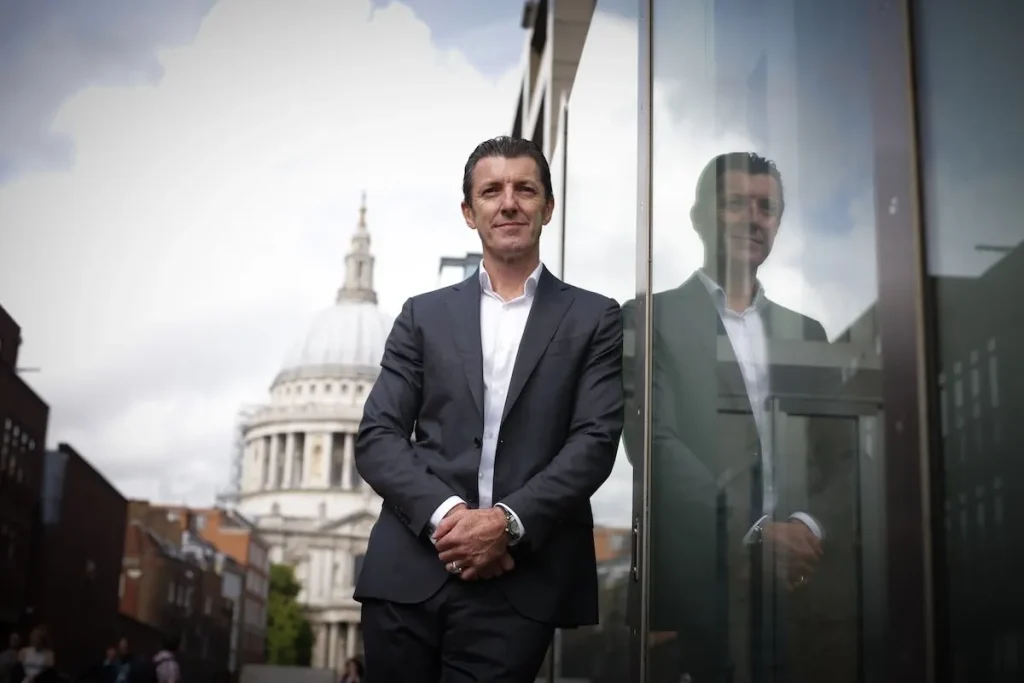
Charlie Mullins OBE is a forthright, common-sense entrepreneur and one of Britain’s most recognisable business figures. The archetypal self-made founder of Pimlico Plumbers, which he built from scratch and later sold for a reported £140m, Charlie is known for his straight-talking views on enterprise, employment and government policy. He is now chairman of WeFix London, where he continues to champion practical business thinking and opportunities for the next generation of entrepreneurs.